
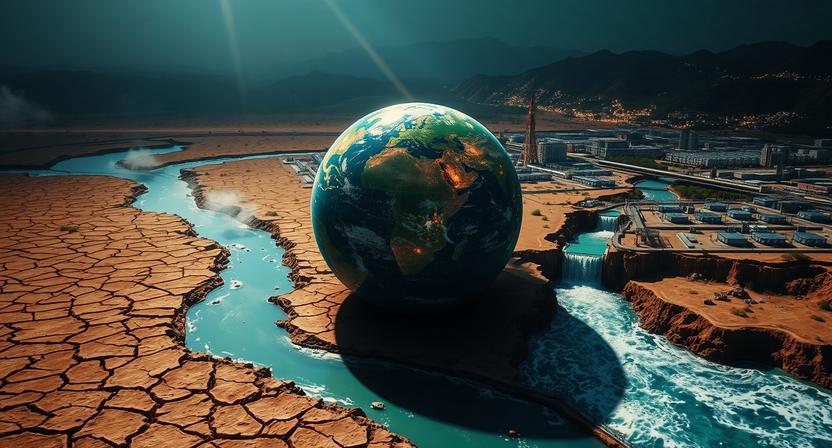
Introduction: The World Has Crossed a Water Tipping Point
In January 2026, the United Nations University Institute for Water, Environment and Health (UNU-INWEH) released a landmark report that marked a turning point in global environmental history. For the first time, the UN officially declared that the world has entered an era of “Global Water Bankruptcy.”
Read the full report from the United Nations University here.
This term is not a metaphor. It signals a reality where humanity has overdrawn its natural water reserves, draining rivers, aquifers, lakes, glaciers, and wetlands faster than nature can replenish them.
Unlike previous warnings about “water scarcity” or “water stress,” this new classification implies something far more alarming:
In many parts of the world, freshwater systems are now permanently damaged.
This is no longer a future risk.
It is a present global emergency, and it is reshaping how nations, industries, and communities must think about water security.
What Does “Global Water Bankruptcy” Really Mean?
Just like financial bankruptcy occurs when spending exceeds income, water bankruptcy happens when societies consume more water than the planet can naturally restore.
According to the UN report:
- Over 4 billion people experience severe water scarcity for at least one month every year
- Nearly 75% of the global population lives in water-insecure regions
- More than half of the world’s largest lakes have shrunk significantly since the 1990s
- Groundwater reserves, the backbone of global water supply, are declining at an alarming rate
- Major rivers, including the Colorado and Indus, increasingly fail to reach the ocean
You can read more about it here.
This means the planet’s natural “water savings account” has been drained, and many ecosystems may never return to their original state.
Why This Crisis Is Worse Than Any Water Shortage Before
Previous water challenges were often seen as temporary droughts or seasonal shortages. However, global water bankruptcy represents a structural and long-term breakdown of freshwater systems.
Unlike earlier crises:
- This damage is not fully reversible
- Climate change is accelerating water depletion
- Population growth and industrial demand continue to rise
- Pollution is turning freshwater into unusable waste
The UN now warns that humanity must shift from crisis management to what it calls “bankruptcy management” , learning how to survive within permanent water limits.
The Key Drivers Behind Global Water Bankruptcy
1. Groundwater Over-Extraction
Aquifers across the world, from California to India are being pumped faster than they can recharge. This leads to:
- Land subsidence (sinking cities)
- Permanent freshwater loss
- Salinity intrusion
2. Climate Change & Extreme Weather
Rising temperatures and erratic rainfall patterns are causing:
- Longer droughts
- Rapid glacier melt
- Flash floods followed by prolonged dry spells
- Unpredictable water availability
3. Pollution from Industry & Agriculture
Large volumes of freshwater are being contaminated by:
- Industrial effluents
- Agricultural runoff
- Untreated sewage
- Heavy metals and toxic chemicals
Once polluted beyond a certain point, water becomes economically or technically impossible to restore.
4. Unsustainable Agricultural Consumption
Agriculture consumes nearly 70% of the world’s freshwater, often through inefficient irrigation practices, putting food security and water security at risk.
5. Wetland & Ecosystem Destruction
Wetlands serve as nature’s water filters and storage systems, yet more than 400 million hectares have disappeared, weakening Earth’s ability to store and purify water naturally.
India’s Water Security Challenge: A National Wake-Up Call
India stands at the frontline of this global water crisis.
Key concerns include:
- Rapid groundwater depletion in states like Gujarat, Punjab, and Rajasthan
- Urban sewage contamination affecting major cities
- Industrial wastewater discharge into rivers and lakes
- Rising water demand from urbanization, agriculture, and manufacturing
- Climate-driven heatwaves and erratic monsoons
India’s per capita water availability continues to fall, pushing the country closer to water-stressed status.
Recent urban water contamination incidents, such as the Indore drinking water crisis, have highlighted the urgent need for stronger water treatment and monitoring systems.
This makes water security not only an environmental issue, but a public health, economic, and national stability priority.
Industrial & Municipal Impact: Why Business Must Act Now
For industries, global water bankruptcy is not just an environmental concern, it is a direct operational risk.
Manufacturing Risks
- Rising water costs
- Supply disruptions
- Regulatory pressure
- ESG compliance challenges
Municipal Challenges
- Growing urban demand
- Aging treatment infrastructure
- Sewage overload
- Pollution-driven health emergencies
Corporate Sustainability Pressure
Investors and regulators now expect companies to:
- Reduce freshwater withdrawals
- Improve water recycling and reuse
- Adopt Zero Liquid Discharge (ZLD) systems
- Demonstrate measurable water stewardship
In this context, water treatment technology becomes a strategic investment, not an optional expense.
Why Water Treatment Is Now a Survival Technology
The UN report makes one message clear:
We cannot rely on natural freshwater sources alone anymore.
The future of water security depends on advanced water treatment, reuse, and recycling solutions.
Critical Solution Areas
- Industrial wastewater treatment
- Sewage treatment and reuse
- Zero Liquid Discharge (ZLD)
- Reverse Osmosis (RO) & advanced filtration
- Desalination technologies
- Smart water monitoring systems
- Decentralized treatment plants
- Rainwater harvesting and water reuse systems
Water treatment is no longer just about compliance, it is about ensuring long-term survival for industries, cities, and ecosystems.
The Opportunity for Sustainable Water Innovation in India
India has a unique opportunity to lead the next wave of global water innovation.
Government Initiatives
- AMRUT water and sewage missions
- River rejuvenation programs
- Industrial wastewater regulations
- Smart city water management plans
Industry Momentum
Sectors such as:
- Pharmaceuticals
- Textiles
- Chemicals
- Food processing
- Power generation
are increasingly investing in advanced water treatment and reuse systems to reduce freshwater dependency.
This is where innovative water solution providers play a transformative role.
How Companies Like Genviss Are Shaping the Future of Water Security
As water becomes a scarce and strategic resource, companies like Genviss represent the future of sustainable water management.
By delivering:
- High-efficiency water treatment systems
- Customized industrial wastewater solutions
- Reliable recycling and reuse technologies
- Scalable municipal water treatment infrastructure
- Environmentally responsible engineering
Genviss contributes directly to:
- Strengthening India’s water security
- Reducing industrial water footprints
- Protecting ecosystems
- Supporting sustainable economic growth
In the era of global water bankruptcy, solution-driven water innovation is not just a business, it is a responsibility.
The Cost of Inaction: What Happens If We Ignore This Crisis?
If global water bankruptcy continues unchecked, the consequences could include:
- Widespread water shortages
- Rising food prices and hunger
- Increased water-related conflicts
- Forced migration from water-stressed regions
- Public health emergencies
- Economic slowdown due to industrial water disruptions
Water is not just a resource, it is the foundation of civilization.
Failing to protect it risks destabilizing societies, economies, and ecosystems.
A Shift in Mindset: From Water Consumption to Water Stewardship
The UN urges governments, industries, and communities to reset the global water agenda.
Key priorities include:
- Treating wastewater as a valuable resource, not waste
- Maximizing water reuse and recycling
- Protecting natural water storage systems
- Investing in smart and efficient water infrastructure
- Embedding water security into climate and sustainability planning
The future will belong to those who treat water not as an infinite commodity, but as a strategic and sacred resource.
Conclusion: The Era of Water Abundance Is Over, The Era of Water Responsibility Has Begun
The declaration of Global Water Bankruptcy is a historic warning, and an urgent call to action.
The era of taking freshwater for granted is over.
The world must now adapt to a reality where every drop counts.
For nations like India, this means accelerating investment in water treatment, recycling, and sustainable management.
For industries, it means rethinking water use as a strategic risk and opportunity.
And for solution providers like Genviss, it means leading the transformation toward a more water-secure future.
In this new global reality, water treatment is no longer just infrastructure, it is survival technology.